


 In many of our articles and antenna design descriptions, the term "antenna repeatability" appears. This term doesn't exist in textbooks and reference books, and many consider it far-fetched, a sort of excuse designed to justify non-working designs. Someone builds an antenna very carefully, precisely according to the description, and it doesn't work. Why? The answer seems simple at first glance. The dimensions in the description are wrong, that's all. What does this "repeatability" of yours have to do with it! Obviously, this very important term—not for theory, but rather for real practice—requires a separate detailed explanation, which this article is devoted to...
 The easiest way to explain this concept is by comparing old analog receivers with modern digital ones. A modern digital receiver contains a minimum of tunable oscillating circuits, and most often has none at all. At the same time, filtering, processing, and conversion of the signal from radio frequency to audio occurs in digital form. On the printed circuit board you will see a "processor" (microcontroller) that does all this, along with additional elements that "support" this microcontroller, as well as interface elements with the outside world. Just the way we like it. If you buy a similar receiver kit on AliExpress and assemble it exactly according to the description, be assured that when you turn it on, it will immediately work as it should—well, except for obvious defects and other issues, such as corrupted firmware. In other words, the "repeatability" of such a design is close to 100%. You assemble it, and without any extra effort, everything works.
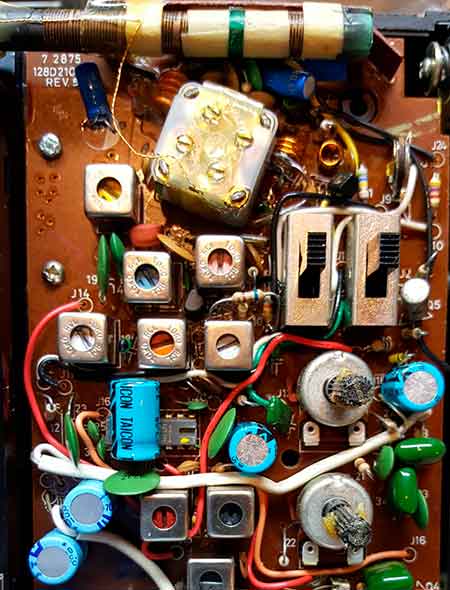 Now let's look at the printed circuit board of an old analog radio receiver. We'll see on it a bunch of elements that need adjustment. Those square aluminum towers on the board are oscillating circuits. The hole on top is for inserting a screwdriver and tuning the circuit to the required frequency. Be assured that if you received a kit of such a vintage analog superheterodyne radio receiver, it definitely wouldn't work properly right after assembly. Moreover, if you start using the "trial and error" method to turn all these trimmers in the circuits, it still won't work. On the contrary, this way you can turn a working receiver into a non-working one. At the factory, there was necessarily a line where these receivers were all tuned using special equipment. Obviously, the "repeatability" of such a design is close to 0%. You assembled it, all components are working, there are no assembly defects. And it doesn't work! Extra steps are needed in the form of tuning, and even the presence of special equipment.
So here's the thing. Among modern consumer digital equipment that surrounds us, the antenna remains almost the only such "analog element." The difference from an antique receiver is only whether we achieved the desired result in the form of increased speed, or whether the antenna is no different from a nail or a random piece of wire. But the very principle that having assembled everything according to standards and drawings we may not achieve our goal remains the same, "analog." Thus, the "repeatability" of a design can be defined as a value inversely proportional to the probability of a negative final result when carefully assembling an antenna. This is for DIY enthusiasts. In production, repeatability is the stability of antenna characteristics and their insensitivity to small errors in mass manufacturing. What does it depend on?
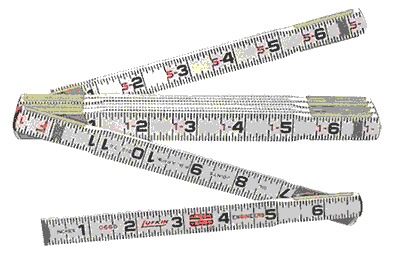 First of all, on the wavelength. If once upon a time, to make a meter-wave television antenna, an accuracy of ±1 cm was sufficient, then for a microwave antenna an accuracy of fractions of a millimeter is already needed. And this, as they say, is a big difference. Firstly, you can't make a Wi-Fi antenna anymore if you only have a folding ruler and pliers with a hammer at hand. Secondly, it's obvious that its repeatability will ultimately be less than that of a meter-range antenna, since when "catching microns" the probability of accumulating errors is greater.
- Design complexity, or in other words, the presence of a large number of elementary parts in it, worsens repeatability, since errors, unfortunately, always accumulate. We can tune a crystal radio receiver with one circuit to the required frequency even without instruments, which cannot be said about a superheterodyne. The same goes for antennas. The Yagi-Uda antenna and its analog the Disk-Yagi antenna should be recognized as very unsuccessful variants of microwave antennas for DIY enthusiasts in terms of repeatability. The desire to increase antenna gain often requires precisely complicating the design. Why not? Just stuff more disks onto the Disk-Yagi without looking and get a "super-gun." But at the same time, repeatability drops and the goal is most often not achieved. Rather the opposite, the gain may even decrease.
- The margin in the antenna's passband width, both by the VSWR criterion and by other important parameters, increases repeatability. That is, if for some reason we slightly "missed" the frequency, this margin guarantees that the operating range will still remain within the passband. Therefore, striving to ensure that the VSWR in the operating range does not exceed 1.5, and preferably even less, is not an end in itself, but precisely a means of increasing the repeatability of the antenna design. A non-optimal design by this criterion would be, for example, a Wire Collinear Wi-Fi antenna.
- The presence of a critical node in the design, small changes in which have a significant impact on antenna characteristics and worsen repeatability. Most often, this place turns out to be the feeder connection point with the accompanying balun, or the connector junction point with the active antenna element. After all, even the line of instrument-grade N-connectors contains several modifications. At the same time, a simple connector replacement at the antenna's "hot spot" can lead to disastrous results. To avoid this, the feed node should preferably be made standardized.
- The use of materials with a large variation in characteristics. A vivid example is the use of fiberglass for creating antennas based on PCB technology. In addition to unacceptably high losses at radio frequency, fiberglass has a large variation in substrate dielectric constant not only in different batches, but even within a single sheet. Therefore, the repeatability of amateur printed antennas is close to zero. Professional antennas use more expensive materials with standardized characteristics as substrates.
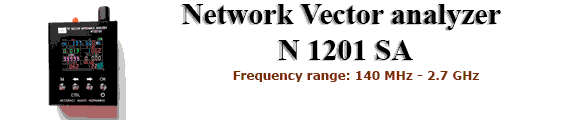
 The list can be continued further, but it's already clear that "repeatability" is not some ephemeral, but quite material characteristic of a design. The materiality can be felt at least by the money spent on making an antenna that ultimately didn't work. Acquiring a vector analyzer doesn't always save the situation. For example, improving the repeatability of the "cantenna" design requires removing the threaded rod with nuts from it and making the boom more standardized, but to tune this antenna with an analyzer, the threaded rod with nuts comes in very handy. However, the tuning itself without proper experience can turn into quite a quest. In addition, good analyzers for frequencies above 3 GHz are still not readily available.
It's also important to note the inadmissibility of arbitrary changes to seemingly insignificant design elements. We took and replaced the metal boom in a Yagi-Uda with a dielectric one. What's the big deal? It's just a supporting element. Not so. With such a replacement, all dimensions suddenly become incorrect. Or we took a drawing, a description. But the available wire is not the right diameter, the metal or dielectric sheet is not the right thickness, the connector is different. And then we took and filled the feed node with silicone or hot glue. It's not important, it's a dielectric, the multimeter doesn't beep, nothing will short anywhere. What else do you need? And in the end, when precisely for this reason nothing works out—it means the dimensions are wrong.
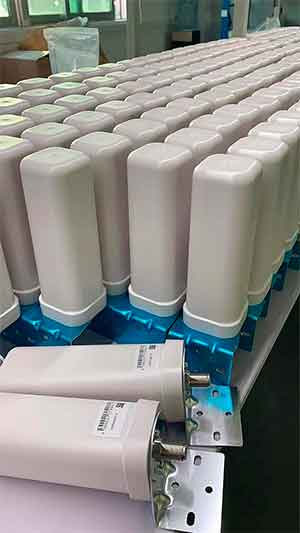
In mass production of antennas, design "repeatability" plays no less, if not a greater role. If a batch of antennas with an unacceptable variation in characteristics comes off your line, and some of them don't work at all, then such a design is no good. Despite the fact that everything looks smooth in the "pretty pictures" in the simulator. Designs with hundredths of a millimeter on the drawing are especially alarming. It seems like everything is beautiful, everything should work, but there's a nuance. At the same time, if the design is good, production is well-established, the same connectors, components, and machines are used, then the repeatability of the antenna batch is close to 100%. It's a different matter for a DIY enthusiast who wants to make a single antenna for their dacha. Therefore, the requirements for repeatability and simplicity of design for DIY enthusiasts should be an order of magnitude higher. However, 100% repeatability is impossible in principle, so you must realize that the risk of failure, in any case, objectively always exists.
Related links:


The site has comments on social networks, which have much more opportunities for communication.